Twenty-two years ago, in 2004, I came to the Maasai Mara for the first time, and I loved it at once — the landscape, the wildlife, and the Maasai people. It felt familiar, like coming home. The first time I saw lions by the Talek River I did not want to leave, and I decided to stay and protect the lions and the other wild animals.
At first I thought wildlife conservation meant spending every day with animals, studying their behaviour, publishing papers or writing books, or doing outreach and education. Only after I had lived inside a Maasai community did I understand that protecting wildlife means, above all, protecting habitat.
The Maasai have lived on the East African savannah for generations. They are herders who live on their cattle and goats. They live side by side with wildlife, and they never eat it. That is the main reason we can still see so many animals in the Mara and the Serengeti today. We owe the Maasai our thanks: they were the first conservationists here.
But with no alternative income, overgrazing has degraded the grassland, washed away the soil and cost the land its biodiversity. The damage runs both ways: no rain at all in the dry season, floods in the wet one, and living conditions that keep getting harder.
I came to see that the key to protecting habitat is to help the Maasai turn grazing land into conservancies — to make them the owners of conservation and the ones who benefit from it, with steady income and services. That is what reduces the dependence on grazing, lets the damaged grassland recover, and brings the community more ways to earn a living.
From 2011 I supported the Maasai Mara National Reserve, donating two vehicles and a great deal of field equipment. In 2012 I moved into Ol Kinyei Conservancy and donated a vehicle, five motorcycles and much more. Around Ol Kinyei we built 16 lion-proof bomas, a church, a classroom, a student dormitory and six water tanks, and we have run the African Savannah Sports Games and a Maasai Mara English writing competition.
We have also donated motorcycles to other community conservancies across the Mara and Laikipia, including the three we now support most closely: Olarro, Mara Ripoi and Nashulai Maasai.
In the Mara we have started a women's handicraft training project, a women's poultry project, a women's massage-therapy project, a vegetable-growing project and a beekeeping project — all of it to give the Maasai community more ways to earn.
We created the Lion Scholarship, which prioritises female teachers and girl students, and we support Nashulai college so that more young Maasai can gain skills, find work after graduating, and step away from dependence on herding.
Today there are more than 26 community conservancies in the Maasai Mara, covering 1,600 square kilometres — larger than the National Reserve itself. The Mara has become one of Africa's most popular destinations, the stage of the largest wildlife migration on Earth, and the ecosystem with the highest density of big cats in Africa.
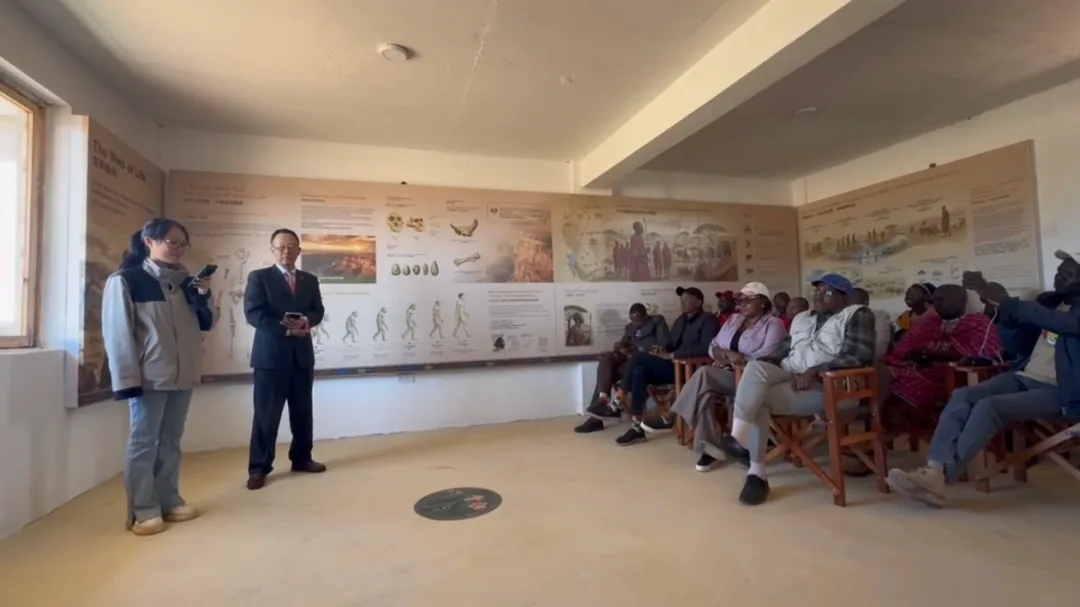
And yet, for one of the eight natural wonders of the world, the Mara had no visitor centre where international guests could learn its history and geography, the behaviour and distribution of its wildlife, or the culture of the Maasai, before heading out on safari. That has been a real loss. I raised it with Mr Fu Liu and Mr Wang Jie ten years ago and both supported the idea. Simon Masago and I began building the Mara Natural History Center three years ago, helped all along by Chinese friends from China and elsewhere who gave money, materials and professional knowledge. Ms Xiaoling Cao, Mr Liu's wife and a co-founder of our foundation, came and lived on site for a month to help manage the construction and the exhibition work; she is our honorary director. Mr Liu Yong has brought many young people from China to visit, and many of our donations come from his clients. Dr Yin Ye visited the site last year, decided to help, and donated 60,000 US dollars towards construction and exhibition work. Without them there would be no opening today.
I want to thank our friends in the Maasai community: Maasai Mara MP Henry Titimet Siololo; Nielson Ole Reiya, who founded Nashulai; Sammy Ole Mpusia, who founded Ol Kinyei; Josephe Kipire Letoluo, who founded Mara Ripoi; Jeremia Ntokoiwan of Olarro; and the representatives of the local communities, churches and schools. You are all welcome here.
I want to thank our friends from the Chinese community in Kenya: Mr Xie Guangqi of the Sichuan-Chongqing Chamber of Commerce and his wife; Ms Xie Pengjuan, president of the Kenya Chinese Tourism Association; Mr Yan Xue of the CAS Africa centre; and the representatives of Kenya-China Travel and Shining Africa.
And I want to thank Christophe Kiarie of IFAW. His Chinese is excellent and we have known each other for many years. Welcome.
It is a great pleasure to welcome friends from across Kenya and the Maasai Mara to this opening. This is a day worth remembering, a day for the record: from now on the Mara has a place that explains its history, its geography, the behaviour of its wildlife and the traditions of the Maasai, to visitors and to the people who live here. From here we can gather more strength to help the Maasai protect this ecosystem and its wildlife, and to raise their standard of living.
We share one planet, and it is the only home we have. Wherever we come from, whatever our religion or culture, we face the same threats — climate change, pollution, the loss of biodiversity, poverty. No country can meet them alone. Only together do we have a chance, and a hope of continuing to live on this Earth.
My home is in the Maasai Mara. I am a Maasai from China. I welcome more people to come to the Mara and become part of our family.
22年前,也就是2004年,我第一次来到马赛马拉,就很喜欢马赛马拉,无论是这里的自然景观、野生动物,还是这里的马赛人,感觉很亲切,就像回家一样。当我第一次在塔莱克河边看到狮子的时候,我就不想离开,我就决定要留下来保护狮子和其他野生动物。
最开始我以为野生动物保护就是天天跟野生动物在一起,研究它们的习性,发表论文或写书,或者是做一些推广野生动物理念的宣传和教育工作。后来当我融入到马赛部落的生活之后,我才意识到保护野生动物,关键是要保护野生动物的栖息地。
马赛人世世代代生活在东非草原上,它们是游牧部落,以牛羊为生。他们与野生动物比邻而居,但从不吃野生动物,这是我们今天还能够在马赛马拉和塞伦盖蒂看到如此众多的野生动物的最主要的原因,我们要感谢马赛人,它们是最早的野生动物保护者。
但是,因为没有其他替代收入,马赛人的过度放牧导致草原植被退化、水土流失和生物多样性丧失,对于生态环境造成了很大的破坏,导致旱季滴雨不下,雨季洪水滔天,马赛人的生活条件持续恶化。
我意识到保护野生动物栖息地的关键是要帮助马赛人把牧区转化为野生动物保护区,让马赛人成为野生动物保护的主体,并从中受益,获得持续的收入和福利,这样才能减少马赛人对于放牧的依赖,从而逐步恢复被过度放牧破坏的草场,为马赛人带来更多的收入来源和收入。
我从2011年开始支持马赛马拉国家保护区,捐赠了2辆越野车和很多野保物资。2012年开始入驻奥肯耶保护区,捐赠了1辆越野车、5辆摩托车和其他很多野保物资。我们在奥肯耶保护区周边修建了16个防狮围栏,修建了1个教堂,1个教室,1个学生宿舍,6个水塔,组织了非洲草原运动会和马赛马拉英文写作比赛。
我们还向马赛马拉和莱基比亚(Laikipia)的其他社区保护地(Conservancies)捐赠了摩托车,包括我们现在重点支持的奥拉罗保护区、马拉瑞波伊保护区以及纳书莱马赛保护区。
我们在马赛马拉发起了妇女手工培训项目、妇女养鸡项目、妇女理疗推拿项目、蔬菜种植项目、养蜂项目,所有的一切都只为造福马赛社区,让马赛人有更多的收入来源。
我们还创建了狮子奖学金项目,重点资助女教师和女学生;我们重点支持纳书莱学院,希望能够帮助更多马赛族年轻人获得更多的技能毕业后能够找到各种工作,从此摆脱对放牧的依赖。
今天,马赛马拉的社区保护地已经超过了26个,面积达到1600平方公里,已经超过了马赛马拉国家保护区,马赛马拉已经成为非洲最受欢迎的旅游目的地之一,也是地球上规模最大的野生动物大迁徙发生之地,非洲大型猫科动物密度最大的生态区域。
但是,作为世界八大自然奇观之一,马赛马拉并没有一个游客中心让国际游客在去 Safari 之前可以了解马赛马拉的历史、地理、野生动物习性和分布、马赛人的文化习俗,这是很大的遗憾。我记得10年以前我跟刘赋先生和汪杰先生提到这个事情,他们都很赞同和支持。我和 Simon Masago 在3年前开始行动起来修建马赛马拉自然历史中心,一路上得到了很多来自中国和世界其他地方华人朋友的支持,他们捐赠资金、物质和专业知识来参与其中。刘赋先生的夫人曹筱玲女士,也是我们栖息地守望者基金会的联合创始人,她来到马赛马拉工地现场住了一个月,帮助优化工程和布展的管理,成为我们的荣誉馆长。刘勇组织了很多来自中国的青少年来这里参观,我们马赛马拉自然历史中心很多捐赠都来自他的客户。尹烨博士去年来到马赛马拉参观我们的工程后就决定来支持,他捐赠了6万美元来支持基建和布展工作。没有他们的支持,我们无法在今天在这里举办开馆仪式。
我还要感谢马赛族社区的好朋友们,有马赛马拉议员 Henry titimet Siololo,创建纳书莱保护区的 Nielson Ole Reiya,创建奥肯耶保护区的 Sammy Ole Mpusia,创建马拉瑞波伊保护区的 Josephe Kipire Letoluo,奥拉罗保护区的 Jeremia Ntokoiwan,还有来自马赛马拉当地社区、教会、学校的代表,欢迎你们。
我还要感谢来自肯尼亚中国社区的好朋友们,来自川渝商会的谢光綦先生及夫人,来自肯尼亚华人旅游协会会长谢彭娟女士、来自中科院非洲中心的严雪先生以及来自肯中旅、闪耀非洲旅行社的代表。欢迎你们。
我还要感谢来自 IFAW 的代表 Christophe Kiarie,他中文很好,我们认识很多年了,欢迎你。
今天很高兴欢迎来自肯尼亚和马赛马拉的各路朋友来出席马赛马拉自然历史中心的开馆仪式,这是值得铭记的日子,这是可以载入史册的日子,从此马赛马拉有了一个给游客和当地居民系统介绍马赛马拉历史、地理、野生动物习性、马赛人的传统习俗的地方,我们可以汇集更多的力量来帮助马赛人更好的保护东非草原的生态环境和野生动物,进一步提高生活水平。
我们共有一个地球,地球是我们唯一的生活家园,无论我们来自什么地方,有什么宗教和文化背景,我们都面临共同的挑战和威胁,如气候变化、环境污染、生物多样性消失、贫困等等,正在威胁我们人类的生存,没有任何国家可以单独去应对,只有各国携手合作我们才有成功的机会,才有继续生存在这个地球上的希望。
我的家在马赛马拉,我是来自中国的马赛人,欢迎更多人来马赛马拉和我们成为一家人。
Speech given at the opening of the Mara Natural History Center, Ngoswani, 1 September 2026.
Chinese text as supplied by the foundation; English translation by Habitat Watcher Foundation.2026 年 9 月 1 日,于肯尼亚恩苏瓦尼,马赛马拉自然历史中心开馆仪式。
中文为基金会提供的原稿。